
The government is following a path where it will not be irresponsible or profligate with public money but will intervene in the interest of the poor

The finance ministry has put out a revised draft in public domain.

The Politburo Standing Committee -- the most powerful body in China -- is unveiled, but in a break from Communist party convention, no successor to Xi Jinping is named.
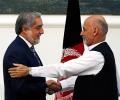
As Ashraf Ghani and Abdullah Abdullah form a joint government after contesting the presidential election against each other, Prakash Bhandari reports from Kabul on the problems facing the new, US-brokered arrangement.

'The path to a resolution of the ethnic conflict is likely to be complicated and controversial with the majority Sinhalese community, and will become less likely if delayed.' 'It will certainly give Rajapaksa fresh political oxygen with which to revive himself and rally the opposition.'

In 2012-13, the Centre managed to cut fiscal deficit to 4.9% of GDP, lower than the Budget revised estimates of 5.2%


What should concern the Indian citizen is not the fact that the world's biggest assault rifle purchase was scrapped. What should is the fact that the tender was for a type of rifle that has never been produced, says Nitin Pai.

Rahul Gandhi has the potential to grow into a good, effective, leader of the Opposition provided he puts his heart and soul into it, with a willingness to learn, says B S Raghavan, the distinguished civil servant who worked closely with India's first three prime ministers.

The following is the full text of US President Donald Trump's first address to a joint session of the Congress on February 28, as prepared for delivery and released by the White House press office.

Hours ahead of his dinner with President Barack Obama, Prime Minister Narendra Modi cautioned the United States against hasty withdrawal of its troops from Afghanistan, citing the mistakes it has committed while pulling out from Iraq.

President Pranab Mukherjee on Monday addressed the first joint sitting of Parliament as mandatorily required under the Constitution after the general elections. The address is the political, economic and foreign policy road map of the Narendra Modi government and covers virtually all crucial areas.

Imagine being a part of a country, but being discriminated against by the majority community and atrocities being committed against you by the state. This is the deplorable conditions that the Rohingyas of Myanmar live in where they are cut off from their livelihoods and sources of income, unable to access markets, hospitals and schools, and have little or no access to relief aid. In order to understand the situation and the genesis of the tragedy unfolding, Rediff.com's Archana Masih speaks to Ambassador Vijay Nambiar, the United Nations' Chef de Cabinet (Chief of Staff), who had served a long stint with the UN in New York on the issue.

Do Modi's foreign visits actually serve India or they nothing more than expensive tools for domestic positioning and image-building, asks Shehzad Poonawalla.

The main culprit in vitiating the inter community/caste/class relations has been the so called 'targeted' approach. This is nothing but discrimination on the basis of faith/caste/class. When an equally poor and deprived child is denied scholarship, despite equal merit, resentment begins to brew, says Colonel (retd) Anil Athale.

'Those who have seen the functioning of the Modi government in Gujarat know that the issues related to Hindutva and issues of economy and growth function simultaneously.' 'Modi's politics are based on the understanding of the middle-class consumer society which is in pursuit of material aspirations.' Sheela Bhatt/Rediff.com reveals the Modi government's economic and political plans for the year ahead.

'It is in the interest of both sides that the visit of the US President is seen as being successful. Both sides have invested considerable political capital in it. This rapid exchange of visits and the decisions taken have to be justified, beyond the symbolism, which is no doubt important in itself. This opportunity to impart a fresh momentum to ties should not be missed,' says former foreign secretary Kanwal Sibal.
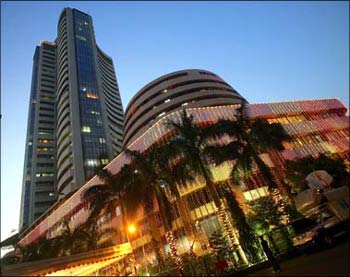
It will be difficult for the Indian equity to outperform overall growth to the extent bullish observers expect.

With wages rapidly rising in China, all is still not lost. Wage costs in India are significantly lower and this fact could still help us turn the tide in our favour.

'India is no longer the India of the '70s and the '80s.' 'It's a large country with the fastest growing economy.' 'In working with India, you just can't go and humiliate the nation publicly.' USIBC President Mukesh Aghi tells Aziz Haniffa/Rediff.com about how he advises American companies to do business with India, what he thinks of Modi's government and the way forward for the India-US relationship.
A reformed Planning Commission should reflect the diversity of Indian debate.

'A lot will depend on the first Aayog and the power it derives.'
A party demanding meaningful change seems to have touched a deep chord among voters, says Sreelatha Menon

Summers dogged by controversies over past views
.jpg)
Modi government has taken some interesting policy decisions in the 100 days since the time he met President Pranab Mukherjee to present his claim as Prime Minister of the world's largest democracy, says Tanmaya Nanda.

In putting the country's economy back on the rails, it is best that Narendra Modi and Arun Jaitley draw on grass-roots feedback and their own practical sense and native wisdom without allowing themselves to be sucked into the quicksand of economic punditry, says B S Raghavan.
he has to demonstrate the ability of his government to take a quantum leap, almost tantamount to setting the Ganga on fire, in the next six months, if not in 100 days, if the people were to take seriously the cascade of commitments spewing out of the President's address to both Houses of Parliament on June 9, says B S Raghavan. B S Raghavan suggests five practical propositions through which the Modi government can bring in paradigm changes.

An Olympic campaign saved by the fortitude of three women, a cricket team that rediscovered itself under a bold and zealous Virat Kohli -- Indian sports in 2016 was a dramatic mix of highs and lows wherein athletes mostly raised the bar but administrators found new ways to embarrass the country.

'The mood in the country is the challenge. Everything is going well, but nobody is feeling good. Why? I don't know. Maybe aspirations are too high... The most important thing in life is to be a good person. Rahul is a wonderful person. He is a thinking man. He has convictions and is passionate about his work.' Sam Pitroda discusses the Congress party and Rahul Gandhi in an exclusive interview with Rediff.com's Sheela Bhatt.

Full transcript of President Obama's speech at the Siri Fort Auditorium in New Delhi.

The administration and America Inc have invested in Narendra Modi's power to transform India. Aziz Haniffa/Rediff.com reports from Washington, DC.

The 'secularists'are more adept at the politics of intense and alarmingly exaggerated fear-mongering, as this kind of politics provides easy votes of Muslims without making them answerable for the concrete issues of poverty, unemployment, lawlessness, and of basic needs like roads, electricity, etc, which is exactly how Nitish Kumar was defeated in the elections, says Mohammad Sajjad.
 © 2026 Rediff.com - Advertise with us - Disclaimer - Privacy Policy - Sitemap - Feedback - About us - Terms of use - Grievances